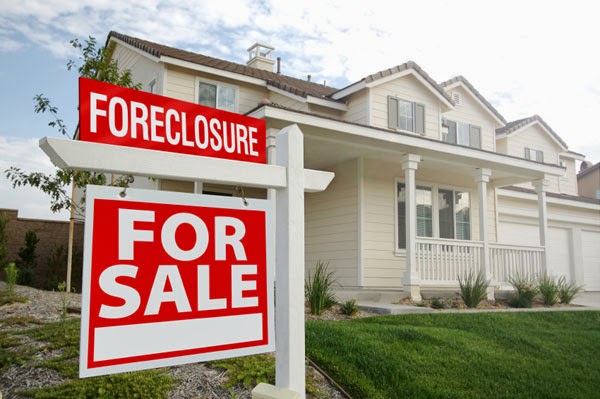
Showing posts with label compra de casa foreclosures. Show all posts

Thursday, April 10, 2014

RealtyTrac: Fla. still No. 1 in foreclosure rates


FREE List of Foreclosures in South Florida

 
IRVINE, Calif. – April 10, 2014 – According to RealtyTrac’s foreclosure report for March, Fla. has retained its No. 1 status for homes in some stage of foreclosure, with one in every 407 Florida homes with a mortgage affected.

And in a look at metro areas (populations of 200,000 or more), Florida cities hold eight of the top 10 spots.

March 2014

RealtyTrac’s report finds that 5,815 Florida homeowners received their first foreclosure notice in March; 9,983 were notified of a foreclosure sale; and 6,258 homes transferred to bank ownership (REOs). However, the total number of impacted homeowners in all stages fell 8.79 percent month-to-month when compared to Feb. 2014 and 21.92 percent year-to-year.

First quarter 2014

Looking at January through March, Florida foreclosure activity in first quarter 2014 decreased less than 1 percent quarter-to-quarter, but it declined 19 percent year-to-year. Still, Florida retained its top spot even though its foreclosure activity has decreased annually for three consecutive quarters.

First quarter 2014 metro areas

Port St. Lucie, Fla. – where one out of every 99 housing units had a foreclosure filing in the first quarter – led the nation’s cities, though seven other Florida cities also made the top 10.
 
Miami came in at No. 2 (one in every 106 housing units with a foreclosure filing); Palm Bay-Melbourne-Titusville at No. 3 (one in every 112); Orlando at No. 4 (one in every 120); Tampa at No. 5 (one in every 122); Lakeland at No. 6 (one in every 127); Ocala at No. 7 (one in every 130); and Jacksonville at No. 8 (one in every 134).

Nationwide, 29 states posted annual increases in scheduled foreclosure auctions. While Florida’s scheduled auctions rose 21 percent, it ranked tenth for auction sales behind Utah (up 226 percent), Oregon (up 177 percent), Connecticut (up 131 percent), New Jersey (up 79 percent), Delaware (up 49 percent), New York (up 47 percent), Maryland (up 46 percent), Massachusetts (up 37 percent) and Nevada (up 21 percent).

Other findings

  • Foreclosed homeowners still live in 51 percent of REOs nationwide out of homes with occupancy data. However, no Florida cities ranked in the top five for owner-occupied REOs.
  • It takes 935 days to foreclose on a Florida home as of the first quarter, but it takes longer in two other states: New Jersey (1,103 days to foreclose) and New York (986 days). Hawaii (840 days) and Illinois (830 days) round out the top five.

RealtyTrac posts an interactive Florida map that compares foreclosure rates color-coded by county. Scroll across a county to see its foreclosure statistics. 
© 2014 Florida Realtors®

Thursday, April 03, 2014

U.S. foreclosure inventory down 35% year-to-year


IRVINE, Calif. – CoreLogic released its February 2014 National Foreclosure Report. 

“Although there is good news that completed foreclosures are trending lower, the bigger news is the impressive decline in the foreclosure and shadow inventories,” says Dr. Mark Fleming, chief economist for CoreLogic. “Every state has had double-digit, year-over-year declines in foreclosure inventory, which is reflected in the $70 billion decline in the shadow inventory.”

“The stock of seriously delinquent homes and the foreclosure rate are back to levels last seen in the final quarter of 2008,” adds Anand Nallathambi, president and CEO of CoreLogic. “The shadow inventory has also declined year over year for the past three years as the housing market continues to heal, including double-digit declines for the past 16 consecutive months.”

Feb. National Foreclosure Report details

• The U.S. had 43,000 completed foreclosures in February, down from 51,000 in February 2013, for a year-over-year decrease of 15 percent. 

• On a month-over-month basis, completed foreclosures decreased 13.1 percent from 50,000 in January.

• National residential shadow inventory – seriously delinquent, in foreclosure or held as REOs by mortgage servicers, but not yet listed on multiple listing services (MLSs) – was 1.7 million homes in January 2014 compared to 2.2 million year-to-year – a decrease of 23 percent.

• In February 2014, about 752,000 U.S. homes were in some stage of foreclosure, known as the foreclosure inventory (not completed foreclosures), compared to 1.2 million in February 2013 – a year-over-year decrease of 35 percent. 

• Month-over-month, the foreclosure inventory was down 3.3 percent from January 2014. 

• The February foreclosure inventory represented 1.9 percent of all homes with a mortgage, compared to 2.9 percent in February 2013.

• At the end of February, 1.9 million mortgages or 4.9 percent were in serious delinquency, defined as 90 days or more past due, including those loans in foreclosure or real estate owned (REO).

Regional highlights

• The five states with the highest number of completed foreclosures for the 12 months ending February 2014 were Florida (118,000), Michigan (50,000), Texas (39,000), California (37,000) and Georgia (34,000). Altogether, the five states accounted for almost half of the nation’s completed foreclosures.

• The District of Columbia (60 foreclosures), North Dakota (421), Hawaii (519), West Virginia (571) and Wyoming (705) had the lowest number of foreclosures.

• As a percentage of all mortgage homes, Florida ranked second (6 percent) compared to New Jersey (6.2 percent) in total foreclosure inventory, followed by New York (4.7 percent), Maine (3.4 percent) and Connecticut (3.2 percent).

• Wyoming (0.3 percent), Alaska (0.4 percent), North Dakota (0.5 percent), Nebraska (0.5 percent) and Colorado (0.6 percent) had the lowest foreclosure inventory.

Shadow inventory

• As of January, year-over-year inventory of seriously delinquent homes decreased in all states by double digits. 

• Twenty-four states had year-over-year declines of at least 20 percent.

• Year-over-year, the shadow inventory is down 22 percent.
 
• For the year ending in January, shadow inventory has decreased at an average monthly rate of 41,000 units.

• Florida has 15 percent of the nation’s distressed properties, with an additional four states – California, New York, New Jersey and Illinois – accounting for 42 percent. 

© 2014 Florida Realtors® 

Monday, March 24, 2014

Realtors in Fla. expect prices to rise more than 5%

WASHINGTON – March 24, 2014 – According to the just-released National Association of Realtors®’ (NAR) Realtors Confidence Index, members expect home prices to continue to rise over the next 12 months, but they expect them to do so at a moderate pace given tight credit conditions and lower home affordability.

The Realtors Confidence Index is a monthly survey distributed to more than 50,000 real estate practitioners. It gauges their expectations about home sales, prices and market conditions. Overall, Realtors expect a median price increase of 3.9 percent over the next 12 months.

Florida is one of four states where practitioners predict the biggest increases – 5 to 7 percent – along with California, Alaska and Hawaii. Tight inventories have helped to lift home values in these areas, according to the survey.

“In states with booming economies like Washington, North Dakota, Texas, Michigan, and the D.C.-metro area, the expected price increase is about 3 to 5 percent,” according to the report.

Real estate professionals also expressed several concerns over the housing market holding back some buyers, particularly due to “unreasonably” tight credit conditions.

“Access to credit was often cited as a deterrent to home buying,” the report says. “About 13 percent of Realtors who did not close a sale in February reported having clients who could not obtain financing.” In those cases, about 6 percent of the professionals said their buyer gave up, while 7 percent said their buyer continued to seek new or other financing.

Other transaction hang-ups were lack of agreement on a price (11 percent); buyer losing a home to competition (10 percent); and appraisal issues (3 percent).

The complete survey is available online.

Source: Realtor Magazine Daily News

© 2014 Florida Realtors®

Wednesday, February 26, 2014

Fla. cities tops in nation for home price increases

             Fla. cities tops in nation for home price increases


JACKSONVILLE, Fla. – Feb. 26, 2014 – A report from Black Knight Financial Services (formerly Lender Processing Services) finds that December home values in the U.S. are within 13.9 percent of the peak reached in 2006.

Black Knight’s Home Price Index (HPI) found nationally that home values rose 0.1 percent month-to-month (compared to November 2012 numbers) and 8.4 percent year-to-year. The high point for U.S. home prices was $270,000 in June 2006. In December, the HPI found a median of $232,000.

From Black Knight’s analysis, it appears most U.S. cities saw their biggest price spike last year, and their dramatic price increases have begun to slow to a more balanced level.

Florida, however, seems to buck that trend a bit, with home prices still climbing faster in comparison to other U.S. states and cities.

According to Black Knight, Florida prices rose 0.6 percent month-to-month in December, coming in second to top-ranking New York with a 0.7 percent rise.

However, Florida cities logged eight of the top 10 spots for “Biggest Movers” when comparing metro areas. Only two other U.S. cities even made the list.

Biggest metro area movers month-to-month

1. Miami: 1.2% month-to-month December price increase
2. Sarasota: 0.9%
3. Key West: 0.7%
4. Fort Walton Beach: 0.6%
5. Poughkeepsie, NY: 0.6%
6. Lakeland: 0.6%
7. Port St. Lucie: 0.6%
8. Tulsa, OK: 0.5%
9. Naples: 0.5%
10. Palm Bay: 0.5%

To calculate its HPI, Black Knight says it looks at repeat sales prices and its loan-level databases. It claims the numbers take REO and short-sale price discounts into consideration.
© 2014 Florida Realtors®                        


Wednesday, February 19, 2014

Investors get back into the real estate game

Investors get back into the real estate game
NEW YORK – Feb. 19, 2014 – Many housing experts predicted a slowdown in investor activity this year, but investors don’t appear to be fading from the market – they appear to simply be shifting their focus to different types of properties as distressed inventories dry up.

“There has been a clear rebound in investor participation in the housing market,” says Thomas Popik, research director for the Campbell/Inside Mortgage Finance HousingPulse Tracking Survey, which showed strong activity among investors in December 2013. “The statistics for the housing market, particularly the non-distressed segment, remain generally strong, but investors still are increasing their activity.”

Investors are increasingly targeting non-distressed properties.

In November, investors accounted for 13.2 percent of purchases of non-distressed properties based on a three-month moving average. That’s up from 10.5 percent in August, marking a seven-month market share high for investors, according to the HousingPulse survey.

Investors started pulling away from the market in March 2013 as home prices soared, with their overall market share dropping to 16 percent, according to a survey by the National Association of Realtors®. But by December, they bounced back, ending the year strong with a 21 percent market share – about the same level at which investors’ presence peaked during the foreclosure crisis.

Source: “Investors Ended 2013 on a Roll,” RISMedia (Feb. 17, 2014)

© Copyright 2014 INFORMATION, INC. Bethesda, MD (301) 215-4688

Friday, February 14, 2014

Florida’s housing market gained momentum, strength in 2013

Fla.’s housing market gained momentum, strength in 2013
ORLANDO, Fla. – Feb. 11, 2014 – Florida’s housing market wrapped up 2013 with more closed sales, higher pending sales, higher median prices and a reduced inventory of homes for sale compared to the year before, according to the latest housing data released by Florida Realtors®.

“Throughout 2013, the state’s housing market has demonstrated it’s in a solid recovery and gaining strength,” 2014 Florida Realtors® President Sherri Meadows, CEO and team leader, Keller Williams, with market centers in Gainesville, Ocala and the Villages. “The positive fundamentals of Florida’s housing sector continue into 2014. However, factors remain that could slow an even stronger economic recovery, such as limited inventories of for-sale homes in many areas, overly-restrictive mortgage credit, rising interest rates, and concerns about the cost and availability of property and flood insurance.”

Year-end 2013
Statewide closed sales of existing single-family homes totaled 227,411 in 2013, up 11.8 percent compared to the 2012 figure, according to data from Florida Realtors Industry Data and Analysis department in partnership with local Realtor boards/associations. Closed sales typically occur 30 to 90 days after sales contracts are written.

Pending sales – contracts that are signed but not yet completed or closed – for existing single-family homes rose 17.6 percent in 2013 compared to 2012’s figure. The statewide median sales price for single-family existing homes in 2013 was $168,000, up 15.9 percent from the previous year.

According to the National Association of Realtors® (NAR), the preliminary national median sales price for existing single-family homes for all of 2013 was $197,100, up 11.5 percent from 2012 – and the strongest annual price gain since 2005. In Massachusetts, the statewide median sales price for single-family existing homes for 2013 was a preliminary $325,000; in New York, it was $227,000; and in Illinois, it was $150,000. The median is the midpoint; half the homes sold for more, half for less.

Looking at Florida’s year-to-year comparison for sales of townhouse-condos, a total of 108,560 units sold statewide in 2013, up 5.1 percent from 2012. Pending sales for townhouse-condos for the year increased 9.7 percent compared to 2012. The statewide median for townhouse-condo properties in 2013 was $128,000, up 20.1 percent over the previous year.

4Q 2013
In the fourth quarter, closed sales of single-family existing homes totaled 54,845, up 4.7 percent from 4Q 2012, according to Florida Realtors data. Pending sales of single-family existing homes were down slightly (-2 percent) for the quarter, compared to the same period a year earlier. The statewide single-family existing-home median price in 4Q 2013 was $170,000, up 13.3 percent from the same quarter a year earlier.

Closed sales of townhouse-condos totaled 24,538 in the fourth quarter, down slightly
(-2.1 percent) from 4Q 2012; pending sales of townhome-condos also dipped (-7.4 percent) compared to the same quarter a year earlier. The statewide median for townhome-condos in 4Q 2013 was $133,000, up 18.8 percent from 4Q 2012.

At the end of 2013 and also for 4Q 2013, inventory for single-family homes stood at a 5.5-months’ supply, while inventory for townhouse-condo properties was at a 5.8-months’ supply, according to Florida Realtors.

Florida Realtors Chief Economist Dr. John Tuccillo said, “We have seen all these numbers before in the monthly releases, but looking at them on a quarterly and annual basis allows for a better evaluation of the real estate market. The trends we have seen develop over the year – rising sales and prices, declining percentage of cash sales and stabilizing inventory – are confirmed in these statistics.

“If we compare the fourth quarter statistics to the annual numbers, we get an even clearer picture of the trends. In the last part of the year, for example, cash sales declined faster. This points to the diminishing presence in the market of investors. But overall sales continued to improve, although at a slower rate. This suggests that owner-occupants are replacing, at least in part, the smaller influence of investors.”

The interest rate for a 30-year fixed-rate mortgage averaged 3.98 percent for 2013, up from the previous year’s average of 3.66 percent, according to Freddie Mac.

To see the full statewide housing activity reports, go to Florida Realtors Media Center and look under Latest Releases, or download the 2013, the 4Q 2013 and general statewide metropolitan statistical area (MSA) data report PDFs under Market Data.

© 2014 Florida Realtors®

Saturday, February 08, 2014

4 Warning Signs to Watch for When Buying a Foreclosure

4 Warning Signs to Watch for When Buying a Foreclosure

Source: Respres.
Over the past several years, many people have gotten great deals on homes because of foreclosures. While the inventory of foreclosed homes in the market is not nearly what it was a few years ago, there are still many to be found. In fact, in some areas, the foreclosures from the 2008-2010 period are just now making their way through the court system and appearing on the market. 
In the right situation, a foreclosure can be an excellent way to obtain your dream home at a much better price than you would expect.  Buying foreclosures can also be an great way to acquire investment properties, as many foreclosures are duplexes, triplexes, and smaller single-family homes that can become lucrative rentals.
Even though foreclosed homes can be a good deal, they definitely carry their own issues and risks that buyers need to be aware of. Let's break down a few of these and see if they should affect your decision on whether to buy the property or not.
Beware of "as-is" conditionI came across an ad when researching foreclosures that said "Cash offers only -- no showings and no inspections prior to closing. New owner is responsible for taking possession of the property upon closing." If you see anything similar to this, run! There is no telling what you'll find, or what kind of problems there are with the house, both physically and legally.
Source: Carsten Volkwein.
There are some other phrases to be extremely wary of. "Cash offers only" means the property is in such bad condition that it won't qualify for any type of financing. This happens with things like structural issues or if there are building code issues (old owners illegally turned a home into a duplex, built a pool with no permit, etc.), or something to that effect.
"As is" will hopefully be followed by the phrase "with right to inspect" or something similar. Never buy a home you can't go into before closing. When searching for my home, I was shown several foreclosures that had issues ranging from holes in the middle of the floor, to a toilet that backed up and overflowed years ago and was left to rot, to a family of raccoons living in one of the closets. If they won't even let you in, just imagine what they could be hiding!
Unpaid taxes/liensThis is especially common if you buy a property at auction. In some states, it can take years to foreclose on a home after the owners stop making payments. Generally, when the homeowners stop paying the mortgage, the property taxes don't get paid as well. The same goes for second mortgages and other liens that are placed against the house to recoup various debts. 
Before making an offer on a foreclosed home, check with a real estate professional or with the local authorities (tax collector, records keeper, etc.) to see if any back taxes or other liens will complicate the sale.
Source: J.B. Hill.
Lack of maintenanceRoutine maintenance is often neglected when houses are in foreclosure and the homeowners are no longer paying their mortgage. In addition, these foreclosed properties can sit vacant for years before new owners finally take possession.
As a result, it is fairly common to find critical maintenance issues that need to be handled immediately, such as plumbing issues, the need for a new roof, and an aging air conditioner. Foreclosed homes also have a higher rate of problems like mold or infestations that occur when a property is neglected for an extended period of time.
When making an offer on a foreclosed home, make sure you have the right to inspect.  Call around to find a home inspector who has a lot of experience with foreclosures and their issues.
Source: Johncarljohnson.
Missing itemsWhen a house sits vacant, it becomes a target for vandalism and theft. Don't be surprised if a home is missing cabinets, appliances, or other valuable items. A friend once put an offer on an older foreclosed home, and upon his home inspection, he found out all of the copper pipes had been stolen, leaving the home without plumbing.
In addition to vandals and thieves, the owners of foreclosed homes are known to take "souvenirs" from the house, especially appliances. 
It's a good idea to get in writing exactly what property is going to convey with the house. If the property is indeed missing things, take this into account when submitting your offer.
Is it worth the discount?The short answer is, maybe. While foreclosed homes generally sell for 15%-20% less than comparables, this is only a bargain if the work needed on the home is not too extensive, and the home inspection doesn't raise too many red flags. 
When buying a foreclosure, work with a real estate professional, as they have been through the foreclosure buying process many times and know what is acceptable and what should scare you away.
The one sure way to get wealthy is to invest in a groundbreaking company that goes on to dominate a multibillion=-dollar industry. Our analysts have done it before with the likes of Amazon and Netflix. And now they think they've done it again with three stock picks that they believe could generate the same type of phenomenal returns. They've revealed these picks in a new free report that you can download instantly by clicking here now.